When Elon Musk Said “AI Will Replace All Jobs” - He Was Half Right
When Elon Musk declared on X that “AI and robots will replace all jobs,” the internet did what it does best - it erupted.
The post came in response to a story citing The New York Times, suggesting Amazon may replace hundreds of thousands of warehouse workers with machines over the next decade.
For some, this was proof that the robot apocalypse is finally here.
For others, it was a glimpse of a perfectly efficient, post-human economy.
But both camps are missing something important.
Not because Elon is wrong - but because the economics of AI and humanity are deeply misunderstood.
The Cost of AI Is Underpriced - For Now
Right now, AI looks cheap. Everyone’s experimenting. Everyone’s building copilots, chatbots, digital twins. The cost of computing power, model training, and data storage is being subsidized by an investment frenzy.
But at scale? That math changes fast.
Running large models continuously, with proper governance, data validation, privacy controls, and human review - isn’t cheap. Most organizations aren’t accounting for the full lifecycle cost of AI.
So while today it feels like AI can do everything, tomorrow it will face the same economics as every technology before it: you’ll use it where it creates the most value, not where it’s trendy.
Cheap Work Will Stay Cheap
The dream of replacing offshore shared service centers in India or the Philippines with AI agents sounds compelling - until you do the math.
The reality? Low-value, repetitive work will likely stay cheap, maybe even cheaper, because of higher unemployment and a flood of displaced labor.
Replacing people with AI in low-margin environments won’t make economic sense when the human alternative is already affordable.
The Real Opportunity: Productivity, Not Substitution
The smarter play isn’t to replace - it’s to augment.
Imagine a finance analyst, supply chain planner, or customer service team that uses AI to cut report-building time by 80%, find insights in seconds, and act faster - without losing context or judgment.
That’s the future. Not fewer humans - but smarter humans with better tools.
In emerging markets, AI will boost productivity.
In high-cost regions like the U.S. or Western Europe, AI will enhance quality, creativity, and speed - where talent is expensive, and value creation matters.
Why are humans indispensable on this journey?
AI can simulate logic, but not intuition.
It can predict behavior, but not read people.
It can optimize performance, but not define purpose.
The gap between computation and comprehension is where humans stay irreplaceable.
Strategic decisions, creative leaps, and empathetic leadership come from human complexity - the unquantifiable instincts that don’t fit in a data model.
The Future Isn’t Jobless - It’s Asymmetric
When Elon says AI will replace all jobs, he’s half right.
AI will absolutely eliminate inefficiency.
It will commoditize execution.
And it will force every professional - from planners to executives - to learn how to use it as leverage.
Those who don’t will struggle.
But those who do will lead a new kind of economy - one built on collaboration between human experience and machine intelligence.
The future won’t belong to the cheapest operators or the fastest coders.
It’ll belong to those who can ask the right questions, interpret nuance, and turn AI from a replacement into an amplifier.
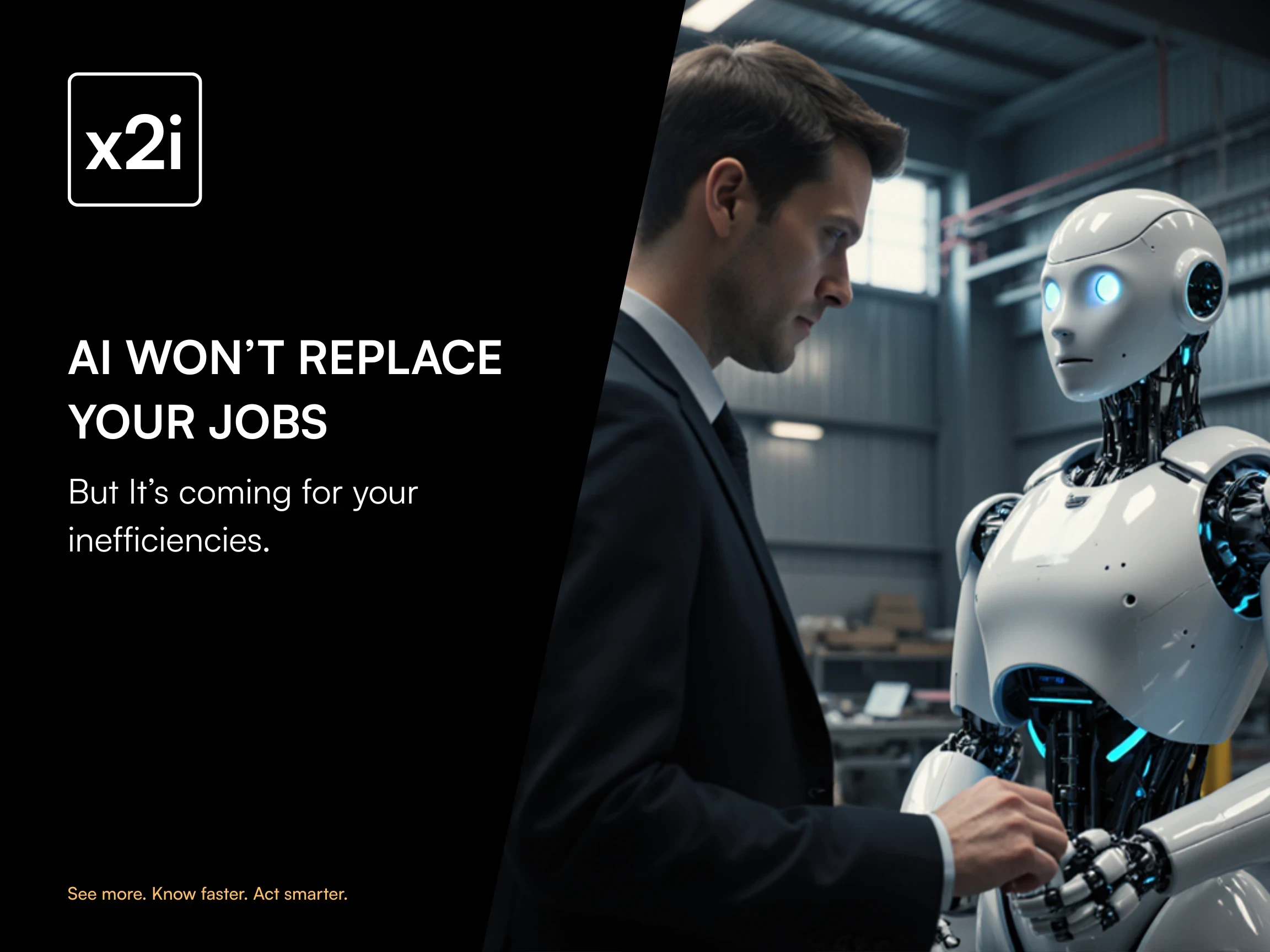
AI isn’t coming for your job. It’s coming for your inefficiencies.
See more. Know faster. Act smarter.
Book a demo and learn how to be more efficient in your work.
#AI #AgenticAI #SupplyChainInnovation #WMS #DigitalTransformation #x2i #Leadership #LogisticsTech #DataIntegration #OperationsExcellence
When Elon Musk declared on X that “AI and robots will replace all jobs,” the internet did what it does best - it erupted.
The post came in response to a story citing The New York Times, suggesting Amazon may replace hundreds of thousands of warehouse workers with machines over the next decade.
For some, this was proof that the robot apocalypse is finally here.
For others, it was a glimpse of a perfectly efficient, post-human economy.
But both camps are missing something important.
Not because Elon is wrong - but because the economics of AI and humanity are deeply misunderstood.
The Cost of AI Is Underpriced - For Now
Right now, AI looks cheap. Everyone’s experimenting. Everyone’s building copilots, chatbots, digital twins. The cost of computing power, model training, and data storage is being subsidized by an investment frenzy.
But at scale? That math changes fast.
Running large models continuously, with proper governance, data validation, privacy controls, and human review - isn’t cheap. Most organizations aren’t accounting for the full lifecycle cost of AI.
So while today it feels like AI can do everything, tomorrow it will face the same economics as every technology before it: you’ll use it where it creates the most value, not where it’s trendy.
Cheap Work Will Stay Cheap
The dream of replacing offshore shared service centers in India or the Philippines with AI agents sounds compelling - until you do the math.
The reality? Low-value, repetitive work will likely stay cheap, maybe even cheaper, because of higher unemployment and a flood of displaced labor.
Replacing people with AI in low-margin environments won’t make economic sense when the human alternative is already affordable.
The Real Opportunity: Productivity, Not Substitution
The smarter play isn’t to replace - it’s to augment.
Imagine a finance analyst, supply chain planner, or customer service team that uses AI to cut report-building time by 80%, find insights in seconds, and act faster - without losing context or judgment.
That’s the future. Not fewer humans - but smarter humans with better tools.
In emerging markets, AI will boost productivity.
In high-cost regions like the U.S. or Western Europe, AI will enhance quality, creativity, and speed - where talent is expensive, and value creation matters.
Why are humans indispensable on this journey?
AI can simulate logic, but not intuition.
It can predict behavior, but not read people.
It can optimize performance, but not define purpose.
The gap between computation and comprehension is where humans stay irreplaceable.
Strategic decisions, creative leaps, and empathetic leadership come from human complexity - the unquantifiable instincts that don’t fit in a data model.
The Future Isn’t Jobless - It’s Asymmetric
When Elon says AI will replace all jobs, he’s half right.
AI will absolutely eliminate inefficiency.
It will commoditize execution.
And it will force every professional - from planners to executives - to learn how to use it as leverage.
Those who don’t will struggle.
But those who do will lead a new kind of economy - one built on collaboration between human experience and machine intelligence.
The future won’t belong to the cheapest operators or the fastest coders.
It’ll belong to those who can ask the right questions, interpret nuance, and turn AI from a replacement into an amplifier.
AI isn’t coming for your job. It’s coming for your inefficiencies.
See more. Know faster. Act smarter.
Book a demo and learn how to be more efficient in your work.
#AI #AgenticAI #SupplyChainInnovation #WMS #DigitalTransformation #x2i #Leadership #LogisticsTech #DataIntegration #OperationsExcellence
Share